



 Menu
Menu


What to really look for when equipping the dishwash area
Paul Anderson, MD of Meiko UK, explains why Meiko takes a different course than other manufacturers
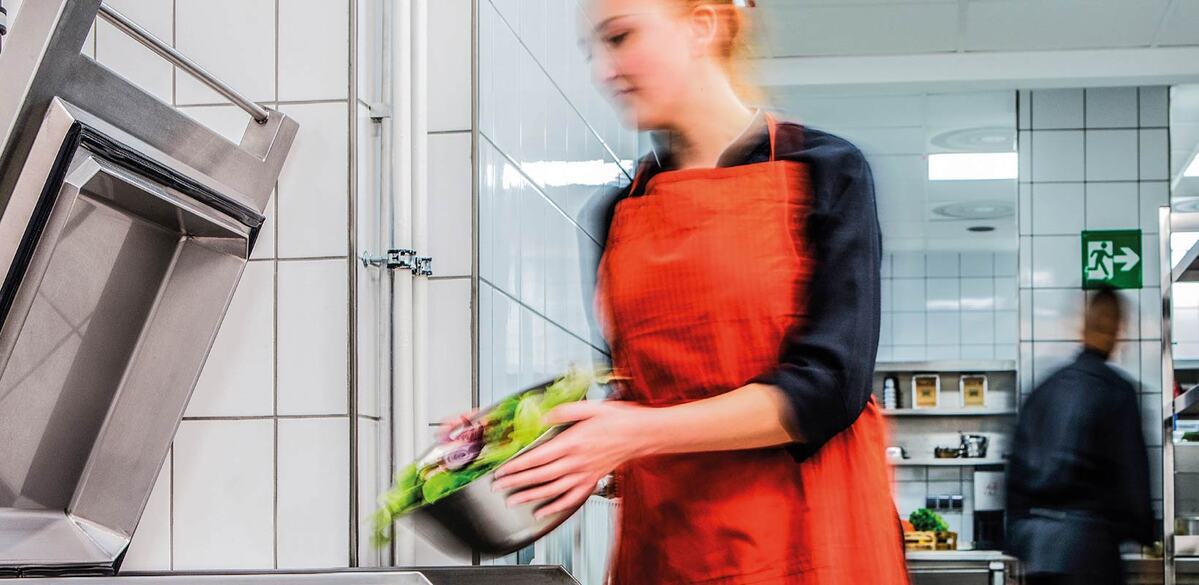
Our contention at Meiko is that recycling and processing food waste onsite for collection and conversion to biogas introduces better hygiene and ergonomics, cuts collection costs and labour in the dishwashing area. It also saves space, creating more space for seating.
Onsite food waste recycling is a key component of the dishwash and can work for most caterers.
What is the payback for food recycling investment?
The answer is never simple, as it depends on each site: food volume, the type of waste (is it more liquid than solid and is captured FOG part of the waste?), plus the size of the premises and the number of staff involved.
However, we almost always end up stating two things: there will be savings in collection costs, and the business will be more labour-efficient, ergonomic and hygienic, which will also save cost.

Equipping the dishwash
Over the years, Meiko has researched how our customers use our machines at one, two, five, or 10 or more years. Feedback from engineers and from the salesforce, combined with measurements of energy and water consumption over time, revealed how kitchen staff actually work – and the findings were not good.
Left alone, without input or guidance from the manufacturer beyond initial training upon installation, dishwashing machines struggle to reach their full potential. Energy, water and chemicals were wasted, and maintenance costs were excessive.
The reasons: staff turnover takes experience away; planned maintenance is often reduced or cut; a lack of meaningful staff training (except in exceptional cases) leads to bad practice and an increase in time off for injuries, aches and strains.
As one of the world’s leading manufacturers, we had to look at how we could further improve the efficiency of our dishwashing machines.

Meiko offers lifetime training support for our machines
The answer was clear, and it wasn’t something built into a machine, but rather comes alongside. Customers must be trained in the sustainable use of machines. If you want to run your machine sustainably, which will most likely be for a decade or more, the key thing to look for is training support in the sustainable use of that machine, available for free for the lifetime of that machine.
Clean plates, clear conscience

It’s a big testament to manufacturing quality and how our customers look after their machines that we just replaced a rack dishwasher that was more than 25 years old.
“Ipswich Town FC has a great KP team that takes excellent care of their equipment,” said Meiko Regional Sales Manager Jason Wade.
“Bartech did a fantastic job of installing the new extraction system for the dishwash area, essential for this project as the dishwash is tucked away deep inside the stadium. The new Meiko UPster K-M250 (max 250-racks per hour) promises even greater sustainability thanks to its built-in heat recovery system, which reduces water, detergent, and rinse aid consumption by 38% and energy use by 21% compared with the previous generation of Meiko machines.
“By choosing systems that balance hygiene, efficiency, sustainability, and quality, operators can reduce costs, meet environmental targets, and elevate service standards.”
To find out more, contact Meiko

The FEA Guide 2025
- Dynamic displays: Optimise your food’s visual appeal
- Rapid cooking appliances: The simple, swift solution
- Combi-ovens: Multifunctional cooking equipment to save time and space
- Choosing the right prime cooking kit for your professional kitchen
- The secret to Hobart’s success? Customer-back innovation
- How to choose the best commercial refrigerator
- How to choose a warewasher with cleaning power
- What to really look for when equipping the dishwash area



More from The Caterer


Most Popular





The Caterer People Summit 2026
 Thu May 14, 2026
 The Line, London
The Acorn Awards 2026
Sun Jun 7, 2026
The Cateys 2026
Tue Jul 7, 2026
Natural & Organic Food Show
Wed Sep 16, 2026ExCel London


The Caterer provides trusted hospitality news, analysis and trends for restaurants, hotels and catering professionals.

Jacobs Media is a company registered in England and Wales, company number 08713328. 3rd Floor, 52 Grosvenor Gardens, London SW1W 0AU.
© 2026 Jacobs Media
