


 Menu
Menu


How to avoid the dreaded one-star hygiene rating

Whether you’re prepping in a Michelin-starred restaurant or a busy event kitchen, all operators have to comply with UK food safety standards – so how can businesses ensure they are at the top of their hygiene game?
From kitchen hygiene to allergen management, nothing is more fundamental for a serious hospitality business than ensuring the food it serves is 100% safe.
As chef Gareth Ward recently found out to his cost, when his two-Michelin-starred Ynyshir Restaurant & Rooms in Powys fell foul of a Food Standards Agency (FSA) inspection, no-one is above the law when it comes to food safety. Even though the restaurant’s subsequent one-star hygiene rating was partially blamed on handling practices that “differ from conventional kitchen operations”, there are no exceptions when it comes to being certified by your local authority, no matter how inflexible you believe them to be.
But what if you have to keep up those standards in a different location every day? Catey and Supplier Award winner Freemans Events Partners puts on 650 event days a year and operates across multiple sites – from greenfield to stadia and everything in between – and must be at the top of its game at every occasion. “Our success depends on building bulletproof systems that safeguard event goers, protect staff and uphold brand reputation across a wide variety of venues,” says operations director Lee Davies.
So how does Freemans achieve it across so many venues and events, and what can other hospitality businesses learn from its example?
All part of the puzzle
Freemans’ work encompasses everything from gargantuan events such as the British Grand Prix at Silverstone right down to festive light trails at venues such as Blenheim Palace. “Each project has its own unique system and set of challenges and safety must always be tailored to fit those specific conditions,” says Davies.
One crucial factor is auditing. “[You need] dedicated teams who review staff training records, risk assessments and liability paperwork, while ensuring daily checks of counters, prep stations and expiry dates,” adds Davies. “However, this isn’t a standalone process and it’s part of a constant service that builds trust. For us, our focus is on custom solutions rather than generic templates, because no two events are the same.”
“Supply chain integrity” is another cornerstone, he says. Freemans Event Partners operates a closed-loop model, managing its entire route-to-market and vetting suppliers to maintain traceability. Centralised procurement ensures consistency, while AA-grade BRCGS certification, held for 12 consecutive years, “sets a benchmark for excellence”. Deliveries are made both before and during events, with top-ups keeping outlets stocked without compromising standards.
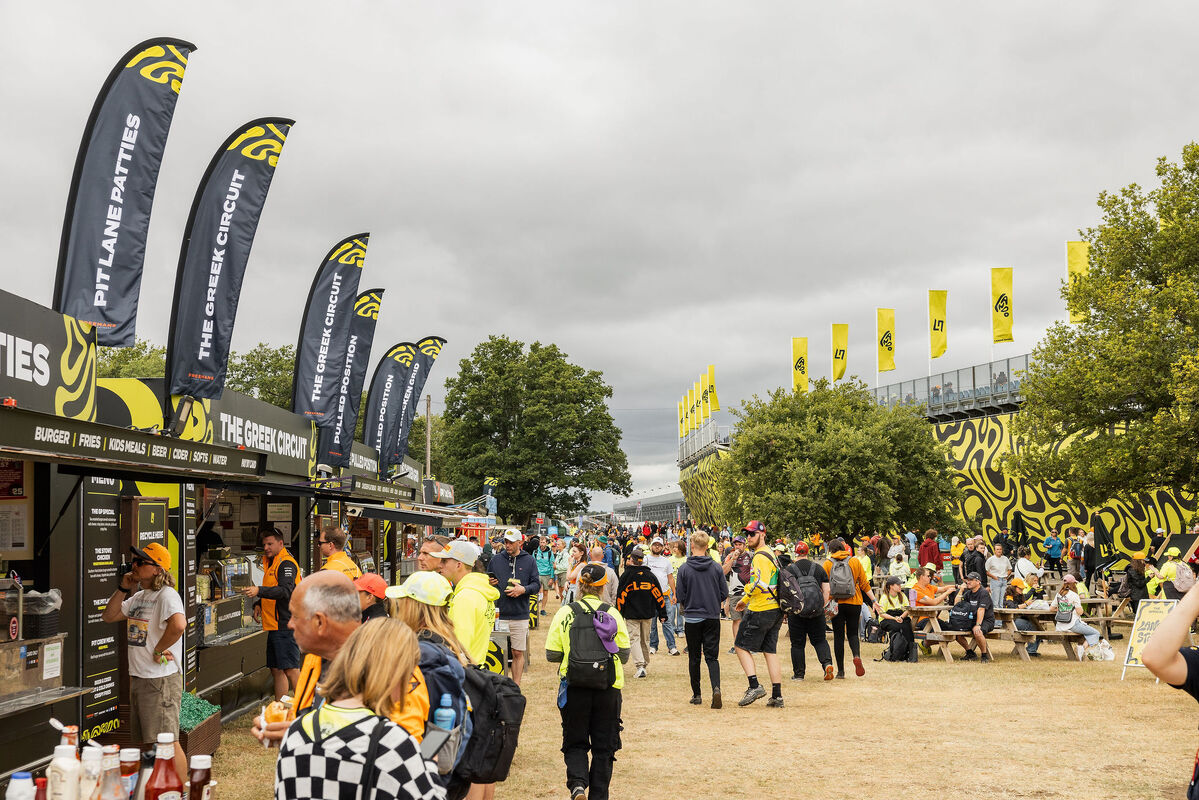
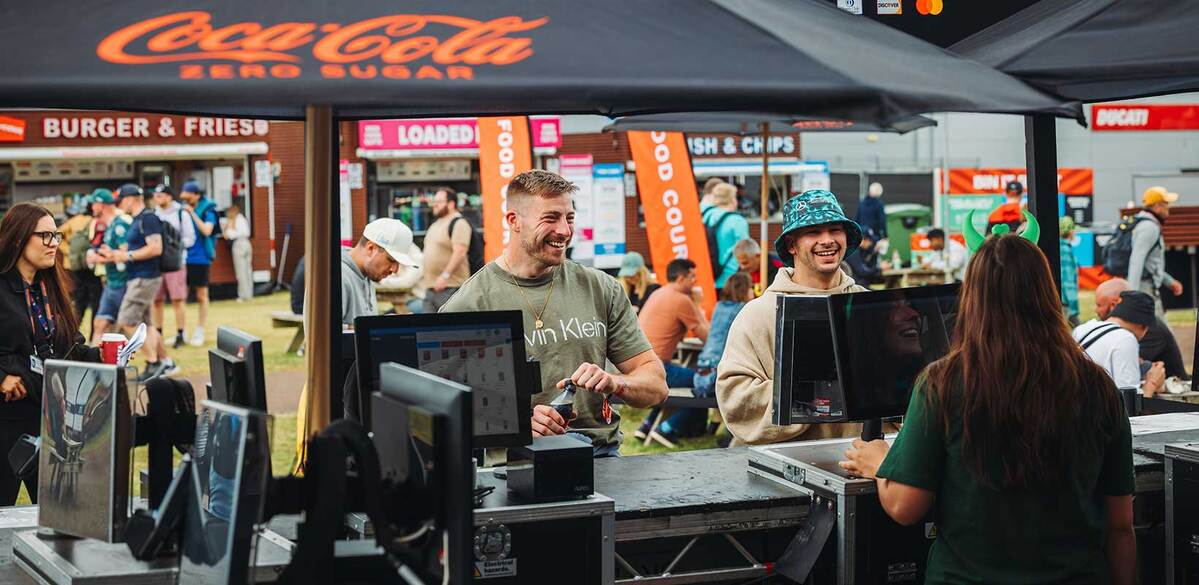
There are other key details. Temporary sites often depend on generators, according to Davies, making power reliability a food safety issue as much as a logistical one. Secure fencing, freezer space, dry storage and carefully planned service flows must therefore be incorporated into the process.
Finally – and crucially – there’s dietary and allergen control. “We have dedicated gluten-free spaces and menu creation ensuring that dietary requirements are respected and venues are able to safely offer an inclusive menu,” says Davies.
“To thrive, businesses must treat safety as the foundation of their brand experience. [This will] build trust and reputation among fans and spectators, and it’s why we put so much emphasis on this, from start to finish.”
Code of many colours
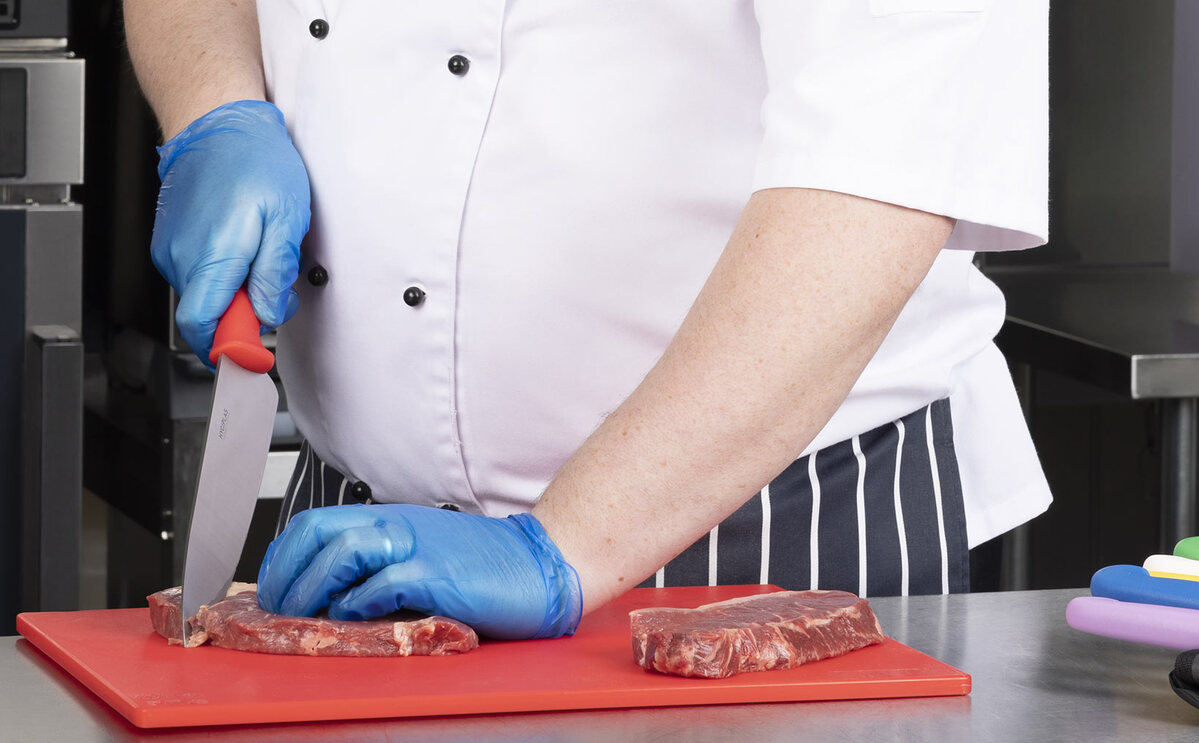
A focus on organisation is clearly crucial. One way to reduce the possibility of contamination is a colour-coded system for food preparation, as recommended by the FSA and in line with HACCP principles. Wholesaler Nisbets offers Hygiplas chopping board bundles, which contain six or seven different coloured boards and a clear guide poster, reminding staff which food type should be prepared on each board.
“The standard guideline is red for raw meat, blue for raw fish, yellow for cooked meats, green for salads and fruits, brown for vegetables, white for dairy and purple for allergies,” says Mark Conron, group head of customer communications, Nisbets UK.
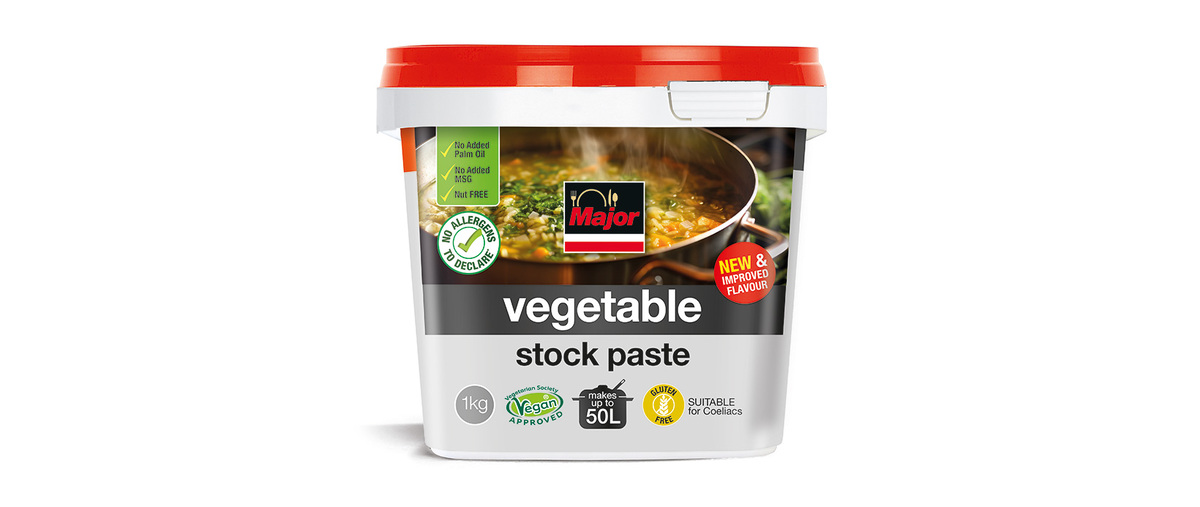
Pre-prepared foods can also be crucial in maintaining kitchen safety, according to Fergus Martin, senior development chef at Major, who recommends Major’s stock pastes. “The entire range is gluten-free and nut-free, and with six varieties to choose from – including three vegetarian-certified and two vegan-certified products – Major’s stock pastes have become a staple for busy kitchens that need consistency, reliability and ease of use, every time,” he says.
Mechline, meanwhile, offers options for those serious about preventing contamination. There’s HyGenikx, a wall-mounted air and surface sanitiser, and a new sensor tap – the TX-i – which uses infrared sensor technology which instantly detects hand motion without false triggers, meaning the user does not have to touch any part of the tap when washing their hands.
Keep your cool
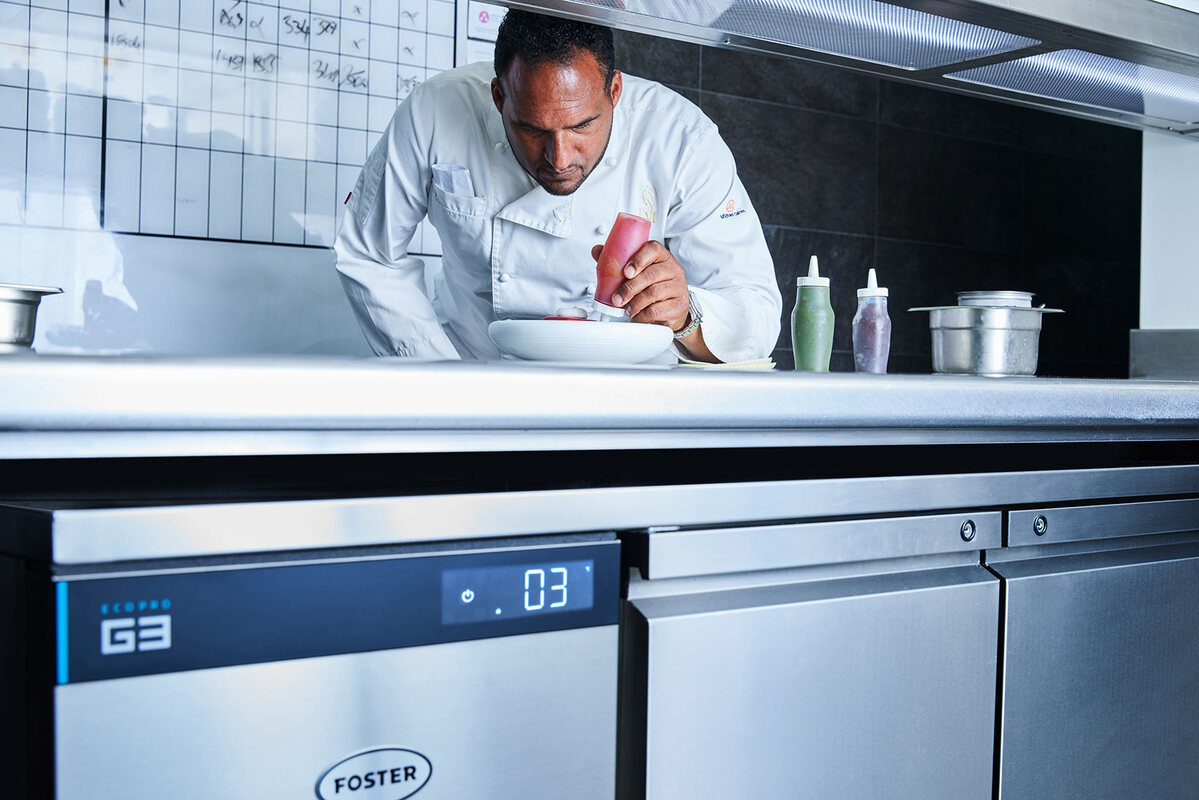
Refrigeration is a key element in the battle against cross-contamination. Foster Refrigerator’s EcoPro G3 range of cabinets and counters is designed to protect ingredients and your reputation. It boasts advanced hygiene features and precision temperature control, according to UK commercial director Rebecca Vincent.
“Airflow is optimised using Computational Fluid Dynamics technology, guaranteeing consistent cooling, even when shelves are fully loaded, so food stays fresh and safe. The G3’s PureControl LED display makes monitoring easy. Staff can check temperatures at a glance from across the kitchen, reducing the risk of unnoticed fluctuations. This visibility is critical for compliance and peace of mind.”
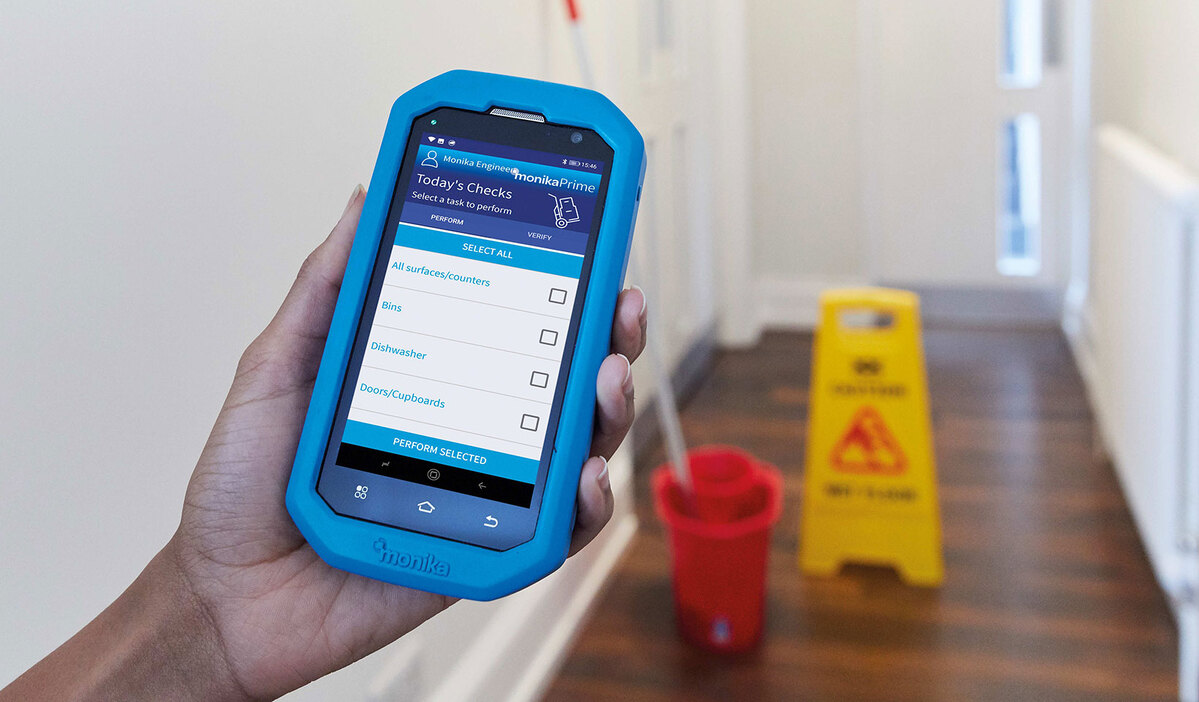
Monika, meanwhile, offers a compliance management system to ensure operators can stay on top of any potential problems. “In an industry which typically sees a high staff turnover rate, it can be challenging to ensure all team members are up to date on the latest health and safety regulations,” says Kate Aston, national sales manager. “To avoid concerns such as allergen issues, operators could consider how a compliance management system can help alleviate these stresses.
“Monika’s new allergen management capabilities allow staff to add ‘products’, eg, an ingredient, part of a meal such as lasagne or a full dish such as a lasagne, garlic bread and green beans. Under each product, managers can list individual ingredients, including each of the 14 allergens, as well as identifying special diets such as plant-based. The intuitive, icon-driven feature enables staff to quickly and confidently advise diners.”
When it comes to food safety, one thing is clear: this is a complex and fast-evolving area which requires constant vigilance.
Suppliers
Foster Refrigerator www.fosterrefrigerator.com/en
Freemans Event Partners www.freemanseventpartners.co.uk
Major Foods majorfoods.co.uk
Mechline mechline.com
Monika www.monika.com
Nisbets www.nisbets.co.uk
Photo: PeopleImages/Shutterstock







More from The Caterer
Most Popular




HRC
 Mon Mar 30, 2026
 ExCel London
The Caterer Supplier Awards
Thu Apr 16, 2026
The Caterer People Summit 2026
Thu May 14, 202658VE, London
The Acorn Awards 2026
Sun Jun 7, 2026


The Caterer provides trusted hospitality news, analysis and trends for restaurants, hotels and catering professionals.

Jacobs Media is a company registered in England and Wales, company number 08713328. 3rd Floor, 52 Grosvenor Gardens, London SW1W 0AU.
© 2026 Jacobs Media

