



 Menu
Menu


Rapid cooking appliances: The simple, swift solution
Easy to install and use, microwaves and accelerated ovens are the cornerstone of quick service venues
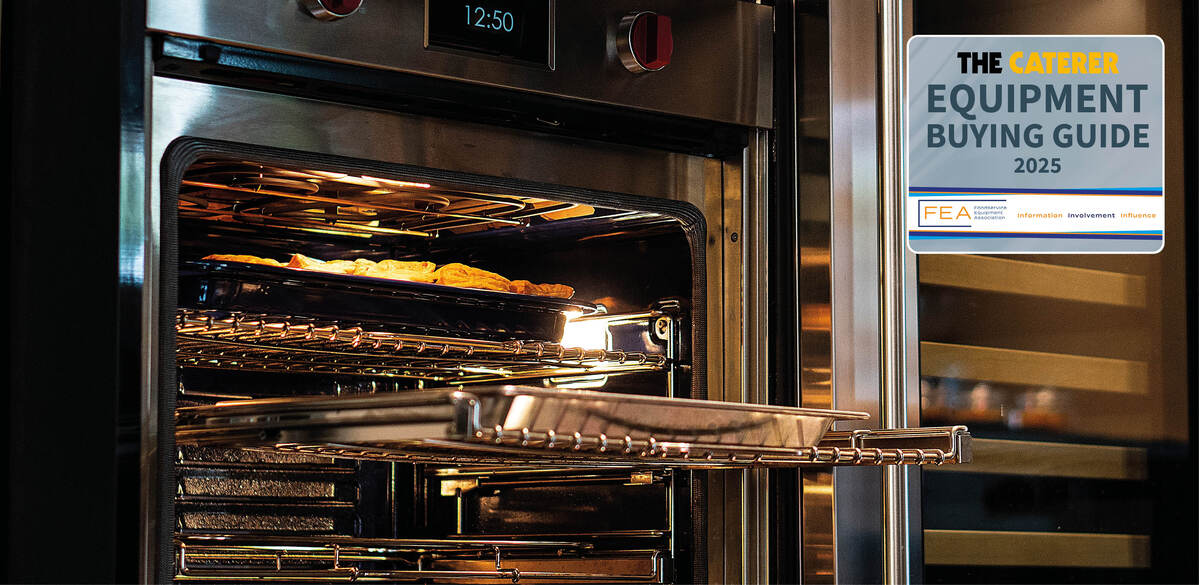
For hospitality sites where speedy service is a must, microwaves and accelerated cookers can be the answer. These high tech appliances warm or reheat food in literally seconds, while typically minimising energy consumption.
Before you plump for a particular model, make sure you consider how much staff involvement will be needed in using the kit. If you’re rolling out the technology across estates, or aware that you have a relatively high staff turnover, the simplified, often icon-based touchscreen operation can make quick training a cinch. Some high speed ovens take even more risk out of the cooking process, with users only required to scan barcodes to identify a food product and automatically start a programme.
Staff safety needs to be taken into account too, so make sure you look out for accelerated cookers which minimise the risk of direct contact with a cooking plate when the oven door opens.
Some previous iterations of microwaves and rapid cookers had a tendency to dry out food or cook unevenly, but many now use multiple technologies to ensure a consistent finished product. So ensure that you’re not sacrificing quality for speed, stress test a prospective appliance and see if there’s any margin for human error in operation.
The FEA’s advice
One category of foodservice equipment that’s witnessed dynamic innovation and exciting new product development is rapid cooking. It can seem like there are new high speed ovens being launched almost every week. These appliances take the notion of kitchen efficiency to a new level. They’re super-fast, they’re easy to use, they often feature ventless cooking, so they’re easy to install, and they produce quality results, consistently. Often they will have connectivity built in, so they can be monitored remotely and new menus can be added across an estate from a central station.
High speed ovens use a combination of different cooking technologies, often (but not always) including microwaves, working alongside, for example, impingement, infra-red and/or convection. Several manufacturers have produced a portfolio of ovens that use different combinations of cooking processes, so that operators can choose the model which best suits their menu. Multi-step automatic programmes mean the food can be cooked and browned in a few minutes, or even seconds, at the touch of an icon – so semi-skilled staff can produce perfect results, with minimal training.
Which isn’t to say the original (humble) microwave is no longer required. Indeed, whereas once upon a time the basic microwave was something to be mildly ashamed of in the commercial kitchen, these days it’s very much an established tool. Great for all sorts of tasks, from defrosting to a final blast of heat, and indeed for certain types of prime cooking, such as steaming. And, of course, it’s a very energy efficient cooking process.
Click here to meet the FEA’s members
The FEA Guide 2025
- Dynamic displays: Optimise your food’s visual appeal
- Rapid cooking appliances: The simple, swift solution
- Combi-ovens: Multifunctional cooking equipment to save time and space
- Choosing the right prime cooking kit for your professional kitchen
- The secret to Hobart’s success? Customer-back innovation
- How to choose the best commercial refrigerator
- How to choose a warewasher with cleaning power
- What to really look for when equipping the dishwash area








More from The Caterer


Most Popular






The Caterer People Summit 2026
 Thu May 14, 2026
 The Line, London
The Acorn Awards 2026
Sun Jun 7, 2026
The Cateys 2026
Tue Jul 7, 2026
Natural & Organic Food Show
Wed Sep 16, 2026ExCel London


The Caterer provides trusted hospitality news, analysis and trends for restaurants, hotels and catering professionals.

Jacobs Media is a company registered in England and Wales, company number 08713328. 3rd Floor, 52 Grosvenor Gardens, London SW1W 0AU.
© 2026 Jacobs Media
