


 Menu
Menu


How restaurants are redefining fish and chips today
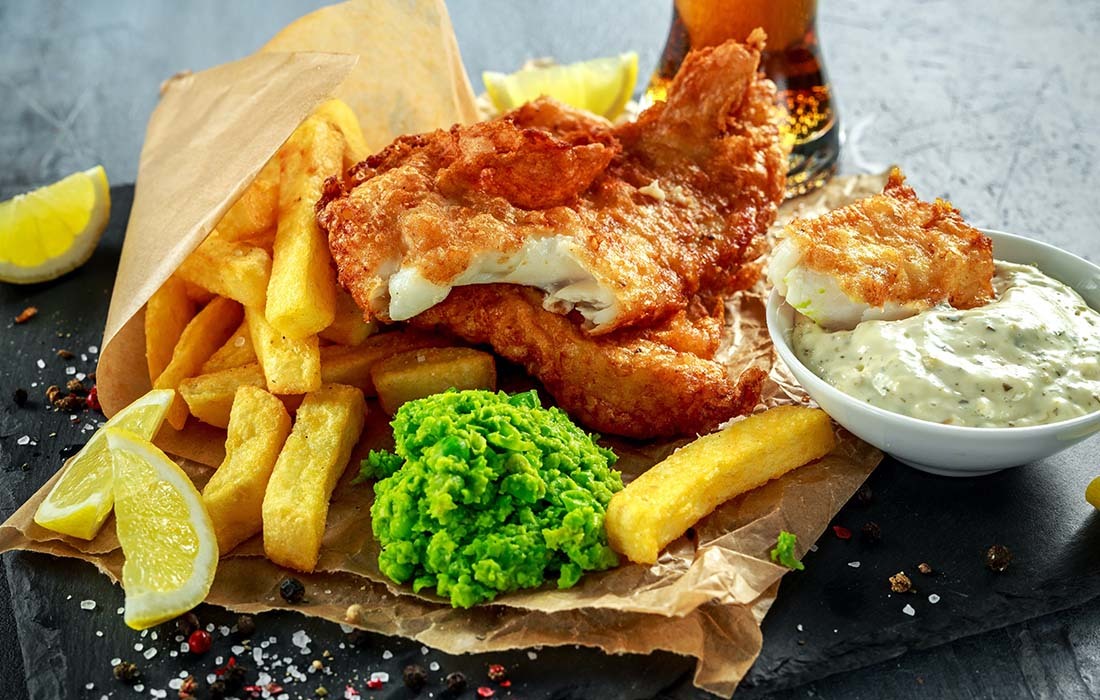
Large fish restaurants serving smaller portions look to be the way forward for serving seafood profitably, finds Will Hawkes
If you were looking for the future of fish and chips, you might not start on a trading estate just off the M90 north of Edinburgh – but this is exactly where you’ll find the Crab and Lobster Fish Shack, which opened in a former Frankie & Benny’s earlier this year.
With a Tesco and a Starbuck’s drive-through for neighbours, it’s certainly an unusual location – but any misgivings are quickly dispelled by the quality of the food: crispy tempura oysters, Cullen skink, seared scallops and, of course, fish and chips, amongst a variety of other options.
It’s proving popular. “It’s taken off better than we expected,” says Jack Coghill, who runs the restaurant in South Queensferry with father Bryan. “We’re hitting margins that we thought we were only going to hit at the end of the year …the feedback we’re getting is really good.”
In an economy where people have less money but still want a special experience, this high-end, off-the-high-street approach to fish and chips is increasingly popular – and there are plenty of other lessons here, too, for operators looking to maximise the appeal of what Coghill called “the nation’s favourite”.
Designing a space to serve seafood
For Coghill, the Crab and Lobster Fish Shack’s site had one huge advantage: its size. “We had to go big,” he says. “A lot of people are struggling in hospitality; there’s only so many people you can fit in a 40-seater restaurant. Even if you’re expensive, there’s only so much you can take with 40 seats.
“We’re doing 180 covers a day, from half past 11 in the morning to half past eight at night. I think volume is going to be key for lots of people, you need to get those bums on seats to pay for wages, for VAT, for National Insurance.”
Coghill, who also runs Jack ‘O’Bryan’s Bar and Kitchen in Dunfermline with his father, says they’ve already had to turn people away because the restaurant is full. A lot of this is down to the quality of the food, he says: “In Scotland, we have an abundance of fresh seafood; I’ve never worked with such fresh produce.” But it’s also to do with the simply-decorated space itself, with its booths, comfortable furniture and brick-arched open kitchen, all of it designed by his father.
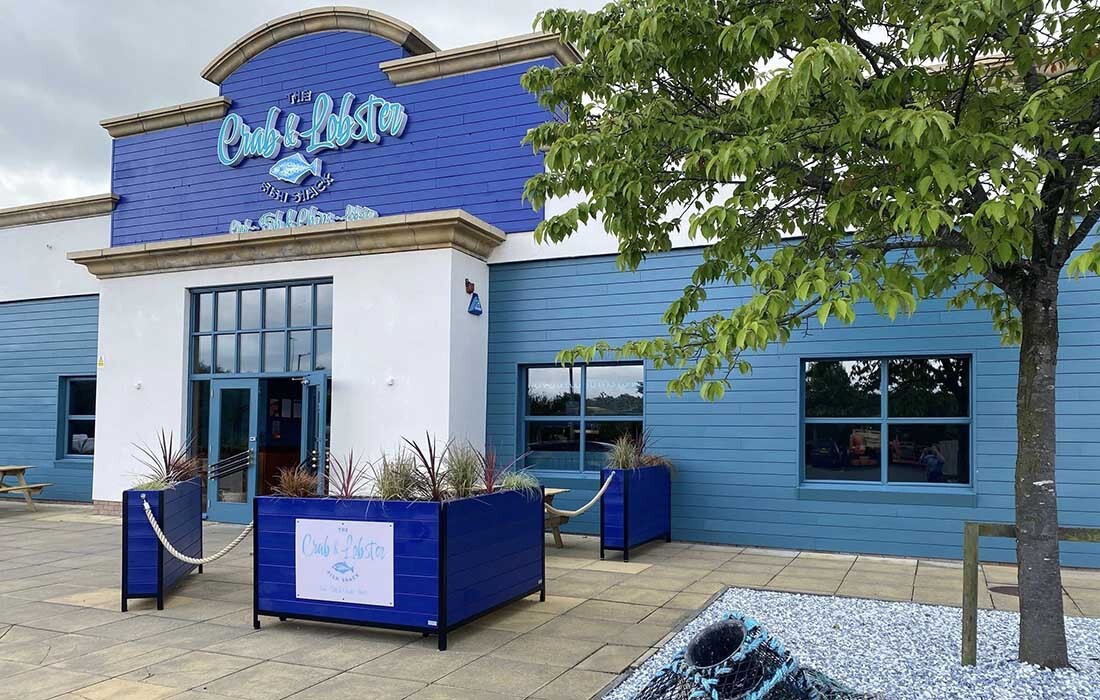
“I asked my Dad, ‘If you weren’t a chef what would you be?’” says Coghill. “‘Oh, I’d be an interior designer,’ he said. Fish and chips shops can be very old-fashioned; we wanted to have somewhere with a more modern vibe, where you can attract a mixture of customers.”
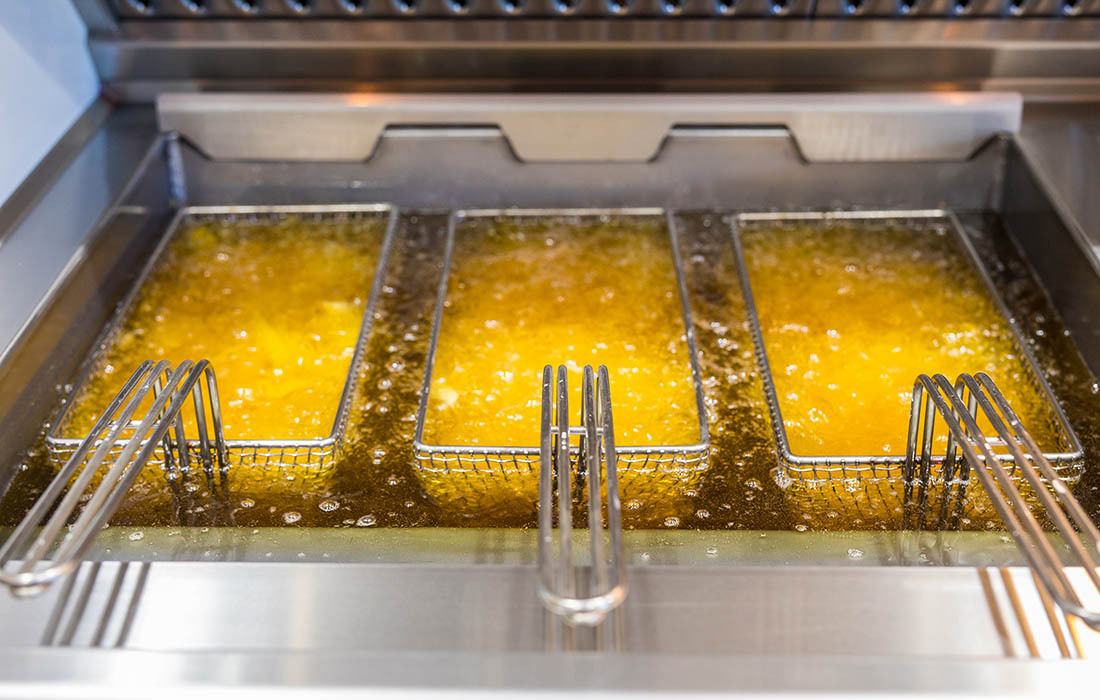
Plenty of money has been spent, including £140,000 in the kitchen. The centrepiece is a five-pan high efficiency Kiremko wall range with a dedicated gluten-free pan, produced by KFE. “That was key for us,” he explains. “A lot of places offer gluten-free at limited times. We wanted it available all day, every day, so having a separate pan was essential.”
‘Portion control doesn’t have to hurt your business’
For Coghill, modern fish and chips is about quality rather than quantity, a message that seems increasingly well understood throughout the industry. “Portion control doesn’t have to hurt your business, in fact, it can strengthen it,” says Nikki Williams, sales director at KFE. “With the right equipment, achieving the balance becomes far easier, because portion control isn’t just about what you serve, it’s about preparing and cooking the right amount from the start.”
Sustainability is another key element of the modern fish-and-chips experience, according to Marrfish’s Ben English. “We advocate using underutilised seafood species because no matter what the season, our seas provide an abundance of seafood,” he says. “Hake is a great example of a fish that is now in demand and trending on menus; 20 years ago we sold 100kg of hake a week, now sales have increased to 300kg a day!”
A lot of sustainable options are available frozen, says Direct Seafoods’ Natalie Hudd. She recommends coley. “It’s an underrated white fish that carries a Marine Conservation Society 2 rating,” she says. “If you’re worried that it won’t be selected on your menu, simply put ‘fish and chips’. This opens the door for you to change the species of the fish depending on the seasons, availability and best pricing.”
And then there’s health considerations, the third major factor affecting customer decisions today. “Customers have also become more health conscious,” says Jonathan Gray, group chef at caterer Restaurant Associates. “Fish and chips recipes on our menus have been reformulated, to reduce fat without losing flavour. We deep fry our fish and also our chips in Brett Graham’s cold-pressed rapeseed oil which offers a richer flavour and is a healthier alternative to traditional frying oils.”
Suppliers
Sustainable sourcing
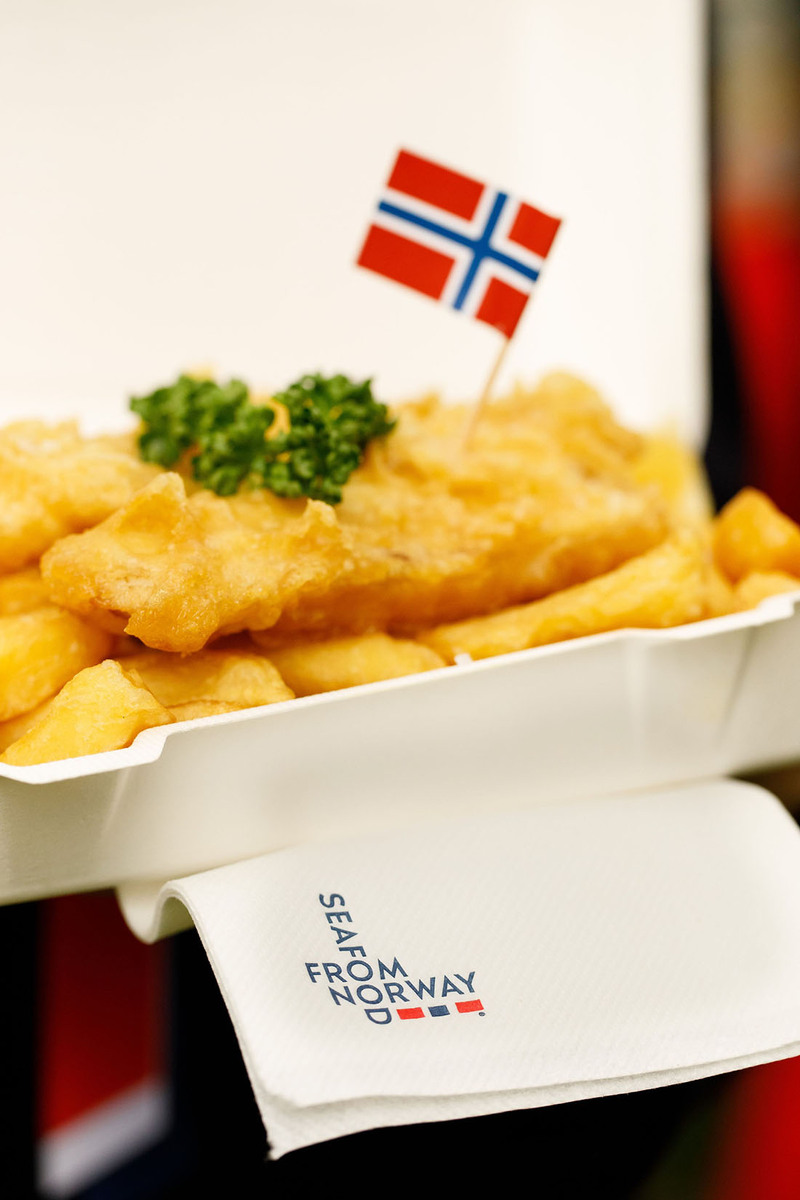
UK seafood consumers are becoming more conscious of what’s on their plate – and how it gets there. While fish and chips remain a national favourite, evolving expectations are reshaping the dish. Diners are increasingly prioritising quality over quantity, with traceability and taste now equal priorities.
This demand for transparency is driving change. Consumers want to know where their fish comes from, and clear, responsible supply chains – from sea to serving – are becoming a standard expectation. A demand for sustainable produce is also influencing purchasing decisions – in 2025 the Norwegian Seafood Council found that over half (56%) of UK consumers are willing to pay more for sustainably-caught seafood.
Fish and chip operators are responding with innovation, and many are beginning to offer alternative sustainable species which still deliver great taste and flavour. Many are also reimagining the traditional menu with global flavours – such as London-based FishWorks, which has introduced Mediterranean-inspired dishes while maintaining a focus on premium cod and haddock. Even portion control is being embraced – not as a compromise, but as a way to serve high-quality, traceable fish in balanced, satisfying portions.
Seafood from Norway is perfectly aligned with these trends, offering sustainably sourced cod and haddock that honour the heritage of fish and chips while supporting its future.




More from The Caterer
Most Popular



The Caterer People Summit 2026
 Thu May 14, 2026
 The Line, London
The Acorn Awards 2026
Sun Jun 7, 2026
The Cateys 2026
Tue Jul 7, 2026
Natural & Organic Food Show
Wed Sep 16, 2026ExCel London


The Caterer provides trusted hospitality news, analysis and trends for restaurants, hotels and catering professionals.

Jacobs Media is a company registered in England and Wales, company number 08713328. 3rd Floor, 52 Grosvenor Gardens, London SW1W 0AU.
© 2026 Jacobs Media
