



 Menu
Menu


London hotel market dominated by overseas investors
A recent report showed US investors purchased the highest proportion of London hotel assets during 2024
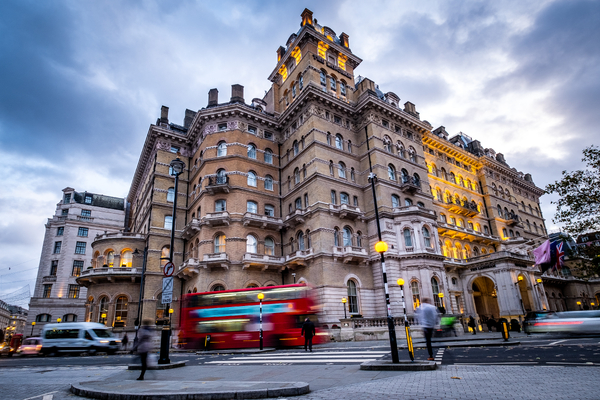
Over 90% of investment into London’s hotel market in 2024 came from overseas, according to a recent report.
The study found 91% of total investment came from international investors, with those from the US purchasing £1.6b worth of assets, five times the volume of the next largest overseas investor group, China and Hong Kong.
Total UK hotel transaction value in the year amounted to £6.5b, according to the report from real estate consultants Newmark, marking the highest annual total since 2018. Almost half (40%) of investment centred around London, which received £2.6b.
Private equity firms led the charge behind the biggest deals last year, with Blackstone buying Village Hotels for around £850m, KKR and Baupost Group acquiring 33 Marriott hotels for around £900m, and Starwood Capital taking on 10 Radisson Blu Edwardian properties. Other US private equity firms, including Ares and Outpost, also remained active.
Three quarters of these acquisitions were portfolio deals, indicating a lack of single hotels coming to the market.
London hotels saw record average daily rates (ADR) of £195 in 2024, a 26% increase on pre-pandemic levels. Revenue per available room (RevPAR) growth in the luxury segment outpaced inflation by 8.1% between 2015 and 2024, supported by the boom in new openings.
In comparison, budget hotels made “more modest real-term gains”, as rates aligned more closely with general price inflation, partly due to a surge in supply in greater London.
This aligned the current structure of the 153,899-key London hotel market, which is dominated by the upscale and luxury sector (57%), followed by economy brands (21%) such as Premier Inn and Travelodge.
Occupancy in London settled at 81% in 2024, just shy of the 83.5% occupancy recorded pre-Covid, with analysts concluding that hoteliers are maximising ADR in a bid to prioritise profitability.
Figures demonstrated London remains a globally sought-after destination, especially for leisure travellers. In 2023, the city welcomed 10.7 million holiday visitors, 1.9 million of whom were from the United States – more than France and Germany combined.
The surge in US tourists in the UK was a notable post-pandemic trend, as this demographic has seen a 75% uplift in the years following the pandemic. US guests also stayed longer, averaging five nights, and spent more, roughly £221 per night, which was 56% more than their European counterparts who spent an average of £142 a night.
In contrast, the number of business travellers staying overnight in London remains “well below” pre-pandemic levels. The report suggested hoteliers should continue to diversify their offering to suit "bleisure" travellers, who often require both high-quality workspaces and extensive leisure amenities.
It also warned business rates for mid-to-upscale hotels are set to rise by 220%, while budget properties face an even starker 290% increase in costs.
Despite these challenges, Will Kirkpatrick, head of hotels and extended stay for commercial real estate advisory Newmark in the UK, said: “London’s hotel sector continues to demonstrate remarkable resilience and adaptability, maintaining one of the highest global occupancy rates despite shifts in corporate travel.
“The sector’s ability to outperform inflation and the market’s sustained position with the second-highest global occupancy rate underscores its strength as an investment class in London. Investors remain highly engaged with leisure demand surging and portfolio transactions dominating the market.”







More from The Caterer
Most Popular






The Caterer People Summit 2026
 Thu May 14, 2026
 The Line, London
The Acorn Awards 2026
Sun Jun 7, 2026
The Cateys 2026
Tue Jul 7, 2026
Natural & Organic Food Show
Wed Sep 16, 2026ExCel London


The Caterer provides trusted hospitality news, analysis and trends for restaurants, hotels and catering professionals.

Jacobs Media is a company registered in England and Wales, company number 08713328. 3rd Floor, 52 Grosvenor Gardens, London SW1W 0AU.
© 2026 Jacobs Media
