


 Menu
Menu


How to use your data to make AI work for you

The information you already hold is probably enough to create a time-saving chatbot or reduce the drudgery of endless reports – you just need to ensure it’s ready to go
AI can streamline and automate most areas of restaurant and hotel operations, but to take advantage of its efficiencies, businesses need to prepare the foundations first.
“Every AI system depends on one thing: the quality of data flowing into it. If your data is fragmented, duplicated, inconsistent or siloed, AI cannot help you. Fixing this is the first step,” says Paul Sarlas, founder and chief executive of food and beverage consultancy Savvy IQ.
“Utter chaos” is how Nick Chapman, chief executive and chair of the Castle hotel in Taunton, describes his tech stack before taking steps to restructure it. The hotel is working with Access Hospitality to lay the foundations for AI.
“AI is not a tool you buy. It is a capability that emerges from the system you build”
“Using Access Evo across the different platforms, such as property management systems, electronic point of sale and labour management, is where the real added value will come. That should make us more efficient and sustainable in what is a very challenging market,” Chapman says.
Javier Llorente, group head of operations at Nestor Stay, a London hotel and serviced apartment group, says: “It is very important to have strong foundations and clear sources of information before employing AI, because otherwise you will struggle to put everything together.”
Nestor Stay’s operational data, from room specifications and amenities to standard operating procedures and policies, was scattered across spreadsheets and documents, limiting AI accuracy. The team addressed this by using AI to propose structured formats for consolidating information, then reviewing and refining each output. Tech partner Apaleo’s open-API infrastructure enabled rapid progress, allowing even non-developers to build or adapt simple tools.
“AI is not a tool you buy. It is a capability that emerges from the system you build,” says Sarlas.
This marks a shift in operator-vendor relations. Rather than selling individual products, vendors will need to act more like consultants or infrastructure partners, helping businesses design and govern their AI ecosystems.


How to make a start
Once your IT system is integrated and the data is flowing, don’t attempt to embed AI everywhere at once – it’s better to start with one or two meaningful use cases.
The finance department is a good place to begin. When two employees left at citizenM and three at Aimbridge EMEA, they were not replaced. Instead, AI now performs various repetitive tasks, such as statement reconciliation, daily revenue and month end reports.
Text-based chatbots that answer customer queries and deliver marketing and upselling are another good starting point. Following a £5m refurbishment, the Queen at Chester, a 218-bed Best Western property, was tasked with driving an additional £1m in annual F&B revenue. To help achieve this, the hotel’s manager Joji Easo started using a WhatsApp chatbot.
Around 75% of guests opt to share their phone number at the time of booking, after which they receive an automated message seven days before arrival and another at check-in. The AI handles FAQs, booking requests and context-aware promotions, such as early check-in and dining incentives.
Do we trust AI?
Obviously, trust is a huge issue. Do we trust the AI’s responses? What level of human oversight is required?
Ming-Tai Huh, head of food and beverage at payment systems provider Square, foresees automation becoming a determining factor in protecting business margins. “This is the year we’ll see AI innovation showing up in practical tools that enhance ordering experiences, loyalty programmes, menu management, inventory oversight and anything that drives speed and ease,” he says.
Prem Jethwa-Odedra, chief executive of chatbot service provider Biteluxe, says the employees at the Queen of Chester do not need to check the responses provided by AI because it only accesses information that has already been provided by the hotel.
He explains: “We collect menus, pairings, event calendars, staff training documents, activities and brand guidelines and feed them into the hotel’s purpose-built AI, which does not ‘hallucinate’ like consumer-grade AI.
“As we are a fully managed service, the hotel simply sends new menus to us to upload. When the AI can’t answer a question, it sends a notification to the front of house team – this occurs around 6% of the time.”
Nestor Stay’s AI chatbot is reducing the manual load for a three-person team, handling nearly 84,000 messages a year across 12 properties. Llorente says: “Our AI creates replies on WhatsApp, email, Booking.com and Airbnb by using the data from similar conversations and knowledge bases.”

AI proliferation is happening across other sectors in the industry, too. Cooking and warewashing equipment brand Hobart recently launched an AI chatbot (Hobie) for customer support and troubleshooting advice, and from February 2026, EPoS provider Square will debut AI tools in the UK, including chatbots and voicebots with menu optimisation, capabilities already available to its US restaurant customers.
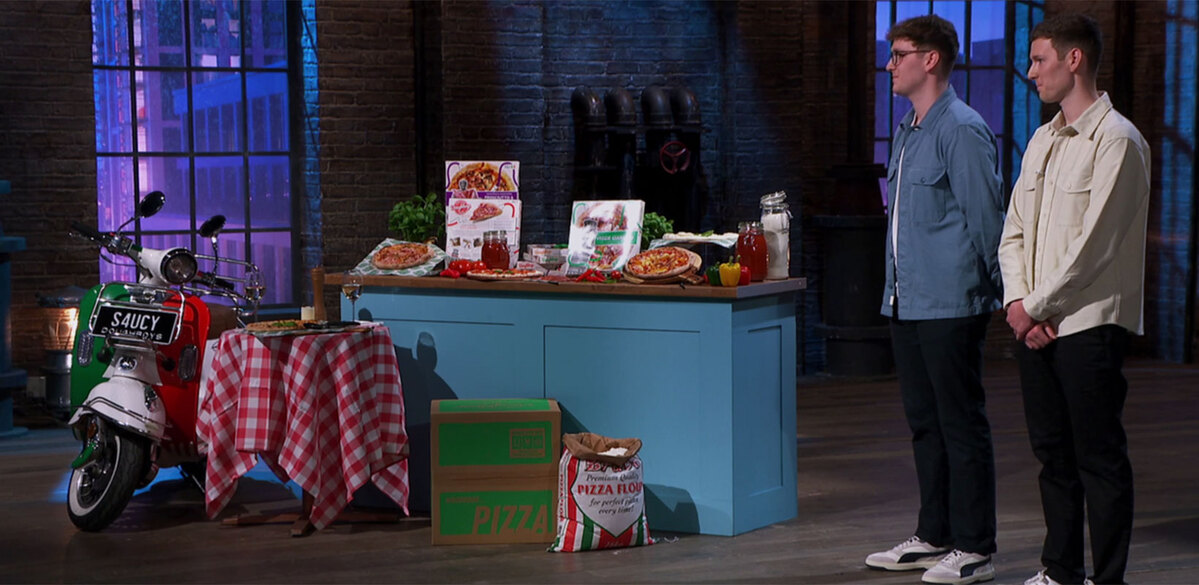
The Pizza Pilgrims group has also designed its own bot for internal communications. For labour scheduling, the pizza restaurant chain teamed up with Sona, an agentic AI platform, which is offering capabilities that have only been commercially available since summer 2025.
The rise of agentic AI
Agentic AI refers to autonomous ‘workers’, who are given a goal and work in the background to achieve it.
Harrison Horne, enterprise account executive at Sona, says: “It’s about proactive agents that are working when you’re not. A world where managers login and the system has already picked up forecast adjustments and suggested changes to the schedule, or flagged potential payroll errors from clock in/out differences and suggested how to resolve them.”
In the field of revenue management, IDeaS is incrementally increasing its agentic AI capabilities. EMEA vice-president Michael McCartan says: “If you have a revenue management culture, the ability to scale is limited by the number of people you can employ to operate the tech. When you start infusing AI, the output is far greater.”
Agentic AI offers the prospect of joined-up workflows. For example, one AI agent produces a forecast that shows low demand ahead, so tells the marketing AI agent to create a campaign to attract guests for that period.
“This could happen in the background without anyone being directly involved. That’s the power of agentic AI,” says McCartan.
Again, the question of trust comes up: “You need checks and balances, and you need human supervision,” he adds. However, if a human needs to check every AI output, where is the efficiency gain? Isn’t this adding back in a layer of work?
Daniel Merriman, director of IT business solutions at Aimbridge EMEA, says: “You need to build confidence and capture evidence of credibility over time. Initially, it may be necessary for a human to validate AI outputs, to ensure it is delivering results according to expectations, before progressively relaxing scrutiny over time as the evidence dictates. Taking this approach provides a reasonable balance between achieving cost or time savings afforded by AI and assuring service quality.”
Learn more about AI from the experts

The Caterer is holding two free one-hour webinars to explore different aspects of AI in hospitality. AI – Building Trust in the Workplace, sponsored by Deputy, will take place on 18 February 2026 at 2pm. Experts will examine how hospitality operators can successfully adopt AI whilst prioritising trust and transparency across the business. Reserve your place here

AI for Guest Experience, sponsored by Lolly, will take place on 28 January 2026 at 10am and will discuss how AI is being used across hospitality to benefit both the guest experience and operator marketing potential. Reserve your place here
Photo: Black_Kira/Shutterstock







More from The Caterer
Most Popular




The Caterer People Summit 2026
 Thu May 14, 2026
 The Line, London
The Acorn Awards 2026
Sun Jun 7, 2026
The Cateys 2026
Tue Jul 7, 2026
Natural & Organic Food Show
Wed Sep 16, 2026ExCel London


The Caterer provides trusted hospitality news, analysis and trends for restaurants, hotels and catering professionals.

Jacobs Media is a company registered in England and Wales, company number 08713328. 3rd Floor, 52 Grosvenor Gardens, London SW1W 0AU.
© 2026 Jacobs Media
